10 June 2005

Born To Be In Rehab


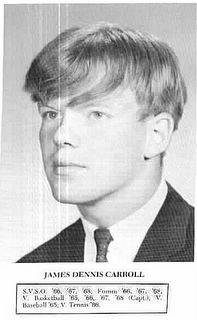
Jim Carroll, c. 1968 Posted by Hello

Greg:

So, to continue our conversation about the relationship betwen madness and artistic/musical ability, I submit the poet and musician Jim Carroll, who had prodigious talent in many areas, junkie-ism being only one. He was also a basketball prodigy and academic wizard. Notice the stunning resemblance to Leonardo Dicaprio who played him in "The Basketball Diaries".


Ted Kooser puts the "rock" in "Adirondack chair" Posted by Hello

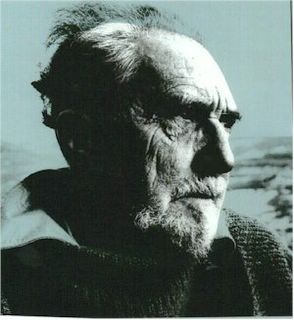
Now, for comparison's sake, I submit Ted Kooser (aka The Kooze, Terrible Ted, The Ten Fingers of Doom, Sorry I Missed My Last Poetry Seminar Professor Kooser) current US Poet Laureate, abundantly talented old coot and retired insurance company executive.

So, beyond the argument that every wildly talented person is nutso-ballo, which may or may not be true, I further submit that artistic inclination (or talent, if that's a measurable thing) has nothing to do with how screwed up or un-screwd up you may be, and is in fact only a perception/expression issue. In other words, artistic inclination is a matter of expressive or communicative style, and not a function of emotional makeup or personality. To wit - on the obverse, fantastically talented poets who were neither nutso nor ballo, and held down regular jobs (mostly) in the private sector: Wm. Carlos Williams, William Stafford, Wallace Stevens. And now the reverse, fantastically talented poets who pickled their livers, took the gas pipe, or booted themselves to Palookaville: Dylan Thomas, Wm. S. Burroughs, Sylvia Plath. And finally, the control category, fantastically talented poets who were hit by dune buggies while vacationing on Fire Island and died at age 40 without developing a really serious substance abuse problem: Frank O'Hara.

As my optometrist is so fond of saying, "Better A - or B?"

So, brother of mine, tortured live = artistic talent is a fallacy in my book. It leads to that whole "if I could just drink/shoot/snort/skrog more, I could write better" line of thinking that even I have been heir to at one time or another.

Thoughts? Comments? Or would you just like to boot some smack while listening to Stan Getz and reading Allen Ginsberg? Or eat a hash brownie the size of Linda Hunt while reading Gertrude Stein?

Cheers, and give my best to Marie.


09 June 2005

Spheres Under The Influence


Hey - what the hell did I just put in my coffee? Posted by Hello

Greg:

You know what would be really nice? If a person could actually know what their sphere of influence was.

Wait, let's try that again.
You know what would be really nice? If I actually knew what my sphere of influence was. But for that, we need to start back in ancient Rome. Or was it Greece? Some place with statues and "free love". Okay, San Francisco. Good enough.

So here we are on the Embarcadero, discussing a philosopher who has long since turned to bone meal. His name is Epictetus, (I know that I mentioned him in one of my previous letters) and he came up with one of the most pithy philosophies that I've ever heard of. In a nutshell it is this:

There are certain things that you can't do anything about, so it's a waste of time to distress yourself about those things. Instead, you should just chill right the hell out and let those things go on their merry way as things are wont to do in this life. It is the nature of life for things to pass through it. Okay, so I just paraphrased the hell out of his philosophy and probably misquoted it, but you get my drift.

So where that leaves me is here: it's fine and understandable to not distress yourself over things that can't be helped, but how do you know which things can benefit from your effort, and which things are beyond your control and should be left alone? It would be nice if I could say for certain that I could do some good in this or that situation by applying skills, talent or input. But determining which things those are is the real pisser.

For instance, I figured out long ago that I can't do anything to change another person's behavior. Beyond that, I feel it would be at the least meddling and at the most disrespectful if I did, no matter how repugnant I found their actions. However, I can do something about communicating to that person what the boundaries are in how they treat me. On the other hand, the fledgling Buddhist in me feels that if I have an opportunity to do some good or at least ameliorate some harm, then I am ethically bound to do so. I know that I can prevent harm to myself and another person if I can prevent them from doing harm to me. Viz., stopping someone from hitting me stops me from being harmed and stops the other person from harming someone (and from a karmic standpoint, prevents them from harming themselves), so it's clear how defending oneself is the right thing to do in all cases. But beyond that...

I know this much for sure. The one place that I have the most influence is between my ears. That's where I apply most of my efforts. But beyond that? Still stumped.

I know that your eyes are weak , your legs are grey and wizened and your digits are knackered. But if you could summon up what little strength you possess to offer an insight here, it would be most appreciated. I'll send you a can of juice for your efforts.

Cheers, and give my best to Marie.


08 June 2005

Screw Insomnia Already, Okay?


Vigilance! Eternal vigilance! Posted by Hello


Greg:

First it was the cops shouting at somebody to take their hands out of their pockets (followed by much screeching of tires and blaring of sirens), and then it was the Chinatown Street Cleaner/Demolition Derby that interrupted my sleep. And now, here it is, a buttock's arch away from the ass-crack of dawn, and I'm flogging my blog once again.

It's at times like these, when my eyelids feel like emery boards, that I envy those who can take a shot of bourbon and a Seconal or while away the early morning hours practicing the bhong, and thus render themselves unconscious. I can do neither. Gone are the days when I saw this hour of the morning through a hogshead of gin and a fistful of blow. (I mean, c'mon, did anyone do anything else in the 80s?) But considering that alternative means of reaching the state I'm in, I'll take old, cranky and woke up by the cops any day over that.

So for larfs, I was clicking on all the links in my profile, trying to see what other blogophiles there were out there who shared my affinity for - okay, pick one - William Carlos Williams [Side note: have you read Williams' "Kora In Hell"? Duct tape yourself to a chair first.], when I came smack upside the realization once again that I really don't like people. Or maybe I just don't like their blogs. And here I am being an apologist for that fact and feeling genuinely bad about it. You know what that means? Probably means somewhere deep down inside I hate myself, or feel superior, or am utterly insecure, or some other completely unflattering fact that I'd rather project onto some poor blogger like virgo_kween than ponder a means to fix. Then again, perhaps rising beyond the level of garden-variety crank to actual apologist crank is a step in the right direction.

Which brings me to the line from the "14 Things That I've Learned" that says "When I finally realized how much hatred there was in me, I no longer wondered why there was war." The problem is not sitting over there somewhere. I am the problem.

Okay, so here's the upside. (Take the gas pipe out of your mouth for a second. It's not all bad. Really!) I have a lot to work with on this issue. First of all, I know how emotions work. So that means I can get a handle on what it is that makes my eyes want to roll heavenward with flabbergastration (new word!) every time I come across, say, a Gloom-Encrusted Goth-errific Paste Merchant writing something about how certainly none can be more forlorn than they. Example: 6th June - Dark of the Moon; my heart wails to break its bony cage. I traded all my Magic the Gathering cards for a new set of fangs. Adieu.

Second, I do practice vipassana meditation, which may actually one day cure me of this affliction. And third, to date no one has kicked me in the treats for being such a judgmental douchebag.

Hey, what's that? I think it's - yes it is! Sleep! Blessed, blessed sleep!

Zzzzzzzzzzzzz.

07 June 2005

The Mud Shoe Diaries: Rachel Lake


Rachel Lake: After gazing upon such beauty, one
simply must consider gouging out their own eyes,
as much of the rest of life will be such a disappointment
thereafterward.
Posted by Hello

Greg:

I don't think I told you about my hike up to Rachel Lake in the Alpine Lakes Wilderness a few weeks ago. It was a journey worth remembering, I tell you what. If I already told you about it, just skip this blog and go surf some porn or something.

Okay. So. I read about the trail to Rachel Lake (trail 1313, better known as the Box Canyon Trail) in some book called "Best Hikes for Children". I took a quick glance at the informative icons which showed the trail to be "moderately difficult for children". So I'm thinking, "How hard can it be?" Plus, it looked on the map like there were some interesting peaks and some river crossings and what have you, so I decided it would make a good Saturday day hike. Teresa had a drum circle to go to, so just Elizabeth and I went.

I think we all know where this story is going. Let me say just here and now that no matter how dire the description becomes, remember that I had a really good time. And remember, no matter how much I yell and scream and beg to be let out, do not open the door to my cage!

The distance to Rachel Lake is about 4.5 miles. Then it splits off and goes up to another set of alpine lakes called the Rampart Lakes which are on the other side of a 4,500 ft. elevation ridge called - you guessed it - Rampart Ridge. The first three miles of the trail are pretty flat and wind through woods and meadows and have great views of misty waterfalls cascading down the distant canyon walls. Most of the way, you're alongside the Box Canyon River, and you actually have to cross it a few times. Needless to say, the whole experience makes you consume so much beauty that your head could explode. And I'm pretty sure that mine did. I have yet to find my occipital lobe, and I know darn well that I didn't leave it on the roof of the car when we drove away.

So at about three miles in we came to the foot of an astounding cataract that was cascading down from somewhere so far up we couldn't even see it. It's an amazing thing to have an immense waterfall on one side and an awe-striking canyon view on the other. Unfortunately, I was too freaked out at the time to take any pictures. Plus I think I was out of film anyway. So we forded our way across the foot of the waterfall and headed on toward Rachel Lake.

On the other side of the waterfall, the trail got pretty difficult. It went from being a hike to being a scramble up switchbacks consisting mostly of stony gullys and toe-hold roots. Did I mention that I had a full pack? Just for practice? Well, I had a full pack. Just for practice. And it was loaded ALL WRONG. As in the load was hanging too far back, which was something that I didn't realize until I was going downhill.


So we lose the trail. But do we panic? No. Why? Because along with my awesome num-chuck (sp?) skills, bow-hunting skills and computer hacking skills , I have developed the Awesome and Terrifying Power of Map Reading. And using a compass. (The classes at REI do not blow. No, they do not.) So with a flick of the wrist, I and my trusty Indian guide (Elizabeth) triangulate our position on the map and get back on the trail.

So - and no, I'm not setting a precedent of starting every paragraph from here on out with the word "so", I'm just lazy and a piss-poor story teller - just about one living hell and thirty gallons of sweat later, we're standing at the saddle which, according to the map, is only a hundred or so yards from Rachel Lake, when it starts raining. And by raining I mean like buckets - like Malaysian amounts of rain.

So - goddammit! There I did it again! Started a paragraph with the word "so"! Anyway, quick as a cat I drop my pack and leap into my rain gear (and Elizabeth does likewise - but leaps into her rain gear, not mine). A couple seconds later, a couple of backpackers who have way more awesome gear (and ostensibly more awesome skills) than ours come down the trail. They tell us is that the weather is moving down from the ridge and the wind is kicking ass up at the lake, but it's really beautiful to look at. However, I've frozen and/or soaked pretty much all of my balls off by this point, so I opt to turn around and head back down the trail.

The crazy thing about water is that it runs downhill, and rain is pretty much all water, so that means that those stony gullys that we had scrambled up were now mini waterfalls that we had to scramble back down. And my pack was loaded all wrong, so there was much utterance of the "F" word, even though not much sense of humor was lost. Plus, the rivers that we had crossed on the way up were ten times beefier now and much less likely to be forgiving of our bullshit river-fording skills. I think Elizabeth got soakers on the way up and on the way down. She had to stop and wring out her socks a couple of times.


So my neoprene rain gear pretty much told me to fuck off after two hours of that, although it wasn't a complete failure. It leaked a little around the wrists and ankles, but other than that, it held up. But man was it cold! And painful! It wasn't until afterward that I found out that I had overloaded my pack's rating to the tune of about thirteen pounds. I'll never do that again.

So you're thinking to yourself, "Y'know Thaddeus, as I recall, you're pretty much a pussy. And I don't mean half way. I mean all the way to the bone. So what kept you going through this ordeal?" I'll tell you what kept me going. A sandwich. We bought mozzarella and pesto sandwiches and they were calling to us from the car. Once we got back to the parking lot, we took to those sammiches like hyenas to a wildebeest. They could've been made out of cat crap for all I know, but after being cold and wet for five hours and tired to the bone, they were ambrosia.

Once my hunger abated, I went back to the "Best Hikes for Children" book to see what sort of sadistic bastard would foist such a cruel hoax as to say that was a moderately difficult hike for a child. And then I actually read the description, it said, "one of the most difficult hikes in the Cascades" and "if you and your children survive the 'cruelest mile', you'll be rewarded with a view of beautiful Rachel Lake!" Christ H. Double-Dutch Jesus! If you survive - ! What kind of kids do these people have? The kind with rhino skin, ham-thick haunches and suction-cup fingertips?

Am I going back? Yer damn skippy. I plan to spend my birthday weekend (6/24-27) up there hiking the whole Rampart Lakes region. And that will certainly be fuel enough for another blog.

Cheers, and give my best to Marie.
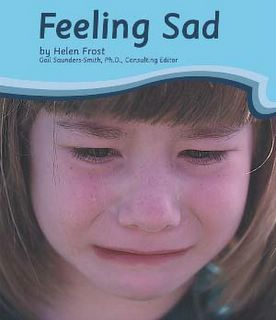


Screw Depression Already, Okay?


Any emotion that does this to a kid's face
oughtta be dragged into an open field and shot.
Posted by Hello


Greg:

Fuck depression, okay? Just fuck it already. It's a fuckin' waste of time. Goddamn my brain chemistry anyway. The only reason I write this stuff down is in the off chance that somebody might find it helpful some day. I was looking around the Web yesterday for resources on anxiety and depression, and that in and of itself is depressing. Why? Because there are no real humans talking about the issue. Just academics and doctors and salesmen - none of whom can adequately empathize with what I'm feeling. On top of that, every other website is trying to sell you something. Buy my tapes, eat my drugs, join my overly expensive therapy group. It's a disgusting load of crap, I tell ya! Capitalizing on a person's depression. It's unconscionable.

So I'm beginning to think that Alan Watts was right with that whole "you oughtta think less" thing. And here's why. If you entertain fewer depressed thoughts while you're depressed, then all you're left dealing with is the physical manifestations of depression. You've effectively taken the "fuel" away from the depression for maintaining itself. I'm not saying that you should stuff all your feelings. That's not healthy either. The most effective thing I've found is to simply observe your thoughts, understand them for what they are, and let them go on their merry (or not so merry) way. The problem with thoughts is that they lead you to believe that there's something to be done. The underlying truth is that there's nothing to be done about being depressed. Depression seems to be a group of particular thoughts and bodily sensations that lead a person to certain actions or inaction as the case may be. The thoughts are what keep the bodily state in place, so fuck 'em and the depression goes away.

It's at times like these that I have to remind myself that there's actually nothing going on. Like I said in one of my previous letters, actual events are over in a millisecond. Then there's a vast tract of time before any salient event takes place again. In the interim, all you're left with is thought cycles that are either grinding on what already happened, or desperately trying to anticipate what might happen next based on previous events, or trying to figure out a way to have thus-and-so happen again. It's all pretty much a monumental waste of brain power. All of those thoughts are getting in the way of the unshakeable presence of reality. It's tantamount to saying, "Get out of the way, wouldja? You're standing in the way of the view of my own ass!"

I was riding the waterfront trolley to work this morning, having all my depressed thoughts and whatnot, and trying as best as I could to just let them roll by, when right in the middle of it all the memory of the fact that riding on the trolley is fun pushed everything else aside. There's no reason why riding on the trolley is fun; it just is. There's no explaining it. And for some reason that recalled realization made me want to cry right then and there. It seems that realization would've made me react in some other way - getting happier, I suppose - but instead... Maybe it was that I wanted to weep with relief. I dunno.

But there you have it. There is still fun in the world, there is joy without reason, mirth without consequence, up without down - all of this regardless of whether I can "feel" it at the moment or not. Life itself is not an unfolding drama with me as its central character. Not even my life is that. There is much more in the world than what goes on between my ears.

Thanks for listening. Give my best to Marie.

06 June 2005

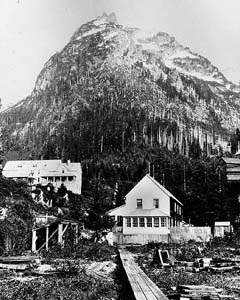
The Mud Shoe Diaries: Monte Cristo


Monte Cristo, Washington c. 1893
Fat Grammas with Weiner Dogs,
Patchouli-Stained Dirt-Worshippers, and
Itinerant Cornholers were still
112 years in the future.
Posted by Hello

Greg:

I am discovering more and more as time goes on that I am a horrible Buddhist. I'm really bad at it. It seems so simple on the surface. Mahayana has but one guiding principle: compassion with equanimity. Sounds easy, right? To fulfill the minimum requirements, all ya gotta do is sit on your can for twenty or so minutes a day and generate compassion for people you utterly despise. To that I would add that it's easier if you do it while you're eating flaming balls of iron.

The reason that this came up is because of a hike I took this weekend to a ghost town called
Monte Cristo that's about two hours north of here. It's supposed to be a very popular trail, largely because it's not difficult at all - only 400 feet of elevation gain over 4.5 miles, and it's all along a US Forest Service road. We (Teresa, Elizabeth and I) went early on Sunday to beat the crowds. And here's where the "I'm an awful Buddhist" thing comes in. The reason that I get up at 4AM to drive for two hours to a trail that's over a hundred miles out of town is not because I like a little peace and quiet. That would be understandable. It's because on some very fundamental level I really don't like people. The real reason I get up early is to avoid running into Fat Grammas and Weiner Dogs on the trail. Or anyone else for that matter. Like the usual Backwoods Pretenders, Two-Wheeled Yuppies, Vegan Dirt-Worshippers, Teenage Soccer Maniacs, Soldiers of Fortune, Hair Farmers, and Itinerant Cornholers who generally plug up all the good trails every weekend. And it's for having completely incompassionate thoughts like these that I am going to be reincarnated as a canker sore.

That aside, it was a pretty darn good hike, but I will tell you this: I'm never going out for an all-day hike in a drizzle in the Cascades without every piece of gear that I own that provides either dryness or warmth. Not that I had it so bad. I didn't. I've got that crazy "wicking" gear that you can practically wear on the dark side of the moon and still be okay. But it woulda been a whole lot nicer to be able to change into a dry shirt at the halfway mark. And have some steaming hot cocoa poured out of a
Jetboil.

On the upside, my Beautiful Wife Who Is Perfect In Every Way, who hails from a tropical island, and who can withstand temperatures as high as 71F and as low as 69F, didn't scowl at the cold once. As a matter of fact, she had a gay old time the whole way, humping through the mud, through the rivers, and up and down the
abandoned townsite. This led me to dub the multi-hundred-dollar wetgear that I bought for her with the title Scowl Insurance. Now she can't stop going on about where we're going next. I have a hiking convert on my hands.

Ach! My starch-filled lunch has seized my aorta in its Morpheus-like tentacles! I must nap immediately whilst cleverly maintaining the appearance of being awake. I am, after all, writing this at work.

Cheers, and give my best to Marie.
04 June 2005

The Secret To Authentic Crankiness


Old and cranky am I,
so punch you in the crotch I will!
Posted by Hello

Greg:

I suddenly realized this morning why old people are so damn cranky. Yeah, there's that thing about how everything hurts all the time, but that's not quite it. It's about reaching one's threshold for tolerance of stuff that probably should never have been tolerated in the first place. Remember how Dad, after 33 years of being an Episcopalian minister, ostensibly sat bolt upright in bed one morning, slapped himself on the forehead, and went - "Wait a minute! Jesus was never Christian!" And then of course he ran off to Israel and the rest is history.

I think there is a time in adolescence when a person develops a healthy cynicism of all the beliefs that they've been handed, and I think the same sort of thing happens in middle age. When you're eighteen or so it's like somebody says "How about mowing the lawn?" and you suddenly realize that there's nothing in mowing the lawn for you, and that there never was, and what you say next is something like "How about mowing my crotch?" That's perhaps not the best way to handle things, but with the limited experience of adolescence, it may seem like the most self-affirming and expedient.


Fig. 1: Pre-adolescent crankitude


Although the middle-age corollary of this may not have as much sauce, it is nonetheless as potent a realization. You wake up one day, take a look around, and go "HMO's? 401k's? Mortgages? All these people are fuckin' crazy! I'm going hiking!" And thus, armed with that judgment of society and the clingers thereto, you set about gathering up vast basketloads of ass to kick. The minute that someone comes by and tries to convince you that some value based in that society should be of the utmost importance to you, you reach into your basket, pick out a pre-kicked ass, and hurl it at them. That, sir, is crankiness in a nutshell. It is the unshakeable commitment to not buyin' it coupled with a healthy chorus of fuh'kawf.

And so, dear brother, I am now trying to extract myself from the embrace of that tarbaby a little more every day - the tarbaby that convinced me once upon a time that what I really needed was a nice car, a lot of income, and prodigious amounts of kowtow to the mores and wherefores of the society that supplied those two things (viz., be able to speak at length on the history and etymology of Seinfeld). Hereforward, anything that has to do with said tarbaby or its ilk and progeny gets a pre-kicked ass and a hearty fuh'koff!. And that is what I call authentic crankiness.

World without end. Amen.

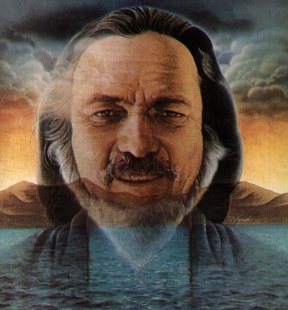
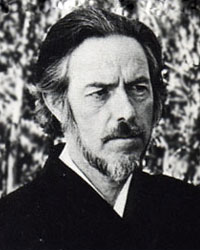
Watts Pt. 2: He's Zen-tastic, Yet Alco-rrific!


Check it out! It's Tenzin Mo-Dope! Posted by Hello

Dear Fart-Stain:

It is becoming ever-so-obvious that not only can you not reply to an actual posted letter, you can't even get your grubby dick-skinners to peck at the keyboard long enough to reply to a freakin' blog! And this whole "InterWeb" thing was supposed to make communication easy. Besides causing rampant infomania, compulsive shopping and increased access to porn, what good has it done? It can't get you to reply to a letter, so what's it worth? I swear to horse-tits, they'll be turning lead to platinum before I ever see a letter from you. Knowledge of that sad fact, however, will not stop me from ranting here and now.

So to get back to Alan Watts,
Wikipedia (the open-source online encyclopedia that any autodidactic wankster like myself can edit) tells me that he was something of a sot and put away quantiferous amounts of booze that no doubt foreshortened his life. He died at age 58. You probably already knew all this, but it was a surprise to me. Oh yeah, there was that and all that acid he ate. And all that stuff he smoked. So. Yeah. Short life.

Which brings me to the point of why it should be so surprising that someone who wrote and spoke with such lucidity should also be a world-class boozehound-slash-fried-hat. Somehow I was under the delusion that someone who was so educated and practiced in Zen - viz., mental purity - would be trying to maintain physical purity as well. Maybe that's a bad assumption on my part. Perhaps the point is that one has nothing to do with the other. Or that some people are good at handling substances, and some are not (like me). Or that alcohol and narcotics are what they are, and work on the nervous system in a definable way, and all of that has nothing to do with the mythology and superstitions that have grown up around them. I've heard that certain yogis can munch down hundreds of mics of acid and remain completely lucid (Ram Dass has a story about that one), yet these same yogis do not choose chemically-augmented consciousness as their path to realization. Maybe they're hip to the fact that the consciousness does not lie within the substance.

So perhaps the point is that spiritual and mental acuity are over here and substance use is over there and although they share a sliver of a Venn diagram, neither one is utterly related to the other.

And with that in mind, I'm going to polish off my usual tankard of morning coffee. And boot some smack. And smoke the dog.

Cheers, and give my best to Marie.

03 June 2005

Watts: Set Your Brain On "Low"; Baste Frequently


Dig that 100-Watts smile! Posted by Hello

Greg:

Either it's a really good idea to listen to recordings of
Alan Watts while you're depressed or it's not. Here's the problem. I pointed out in another letter some time ago that one of the things that supports the refractory period of an emotion is a sort of "channel" of thought that seems to arise that will only support thoughts congruent with that emotion. Depression, f'rinstance, like the one that's been chewing at me for the past three or so days, will only entertain thoughts that support its reason for being. So I don't even have to tell you what my mental story has been the past few days. All I have to do is say that I've been depressed and you can pretty much guess the internal dialogue.

So along comes Watts, courtesy of
Audible.com, and exclaims that thinking is the thing that separates us from reality. And as I said in a previous letter, thinking is almost never concerned with what's going on in the present. It's mired in the mud of some previous experience, or anxiously trying to anticipate future events. Since "present" is the only moment there really is, then maybe Watts is on to something there. I spend a lot of my time when I'm depressed not only gnawing on actual negative events in the past, but brewing up imaginary negative events to stew on even more. "Throwing rocks in my own pond", as Teresa would say. It's not bad enough that I actually had an argument with this or that person at some time in the past, but I have to go and dream up an imaginary argument to have with them in the present! Christ Jesus, do I have the fucking corner on the neuroses market or what!? What a waste of a perfectly good brain. And the real kick in the prunes is that as much as I know about emotion, it doesn't seem to stop the process from happening.

So there must be some way in which I benefit from doing this or I'd stop doing it, right? Or is that completely off the mark? Do humans continue behaviors that are of no benefit to them whatsoever? I have no idea. How is your vantage point? What can you see from over there? Tell me what this is that I have caught in my philosophical teeth.

Cheers, and give my best to Marie.

19 August 2004

The Secret To Lifelong Happiness Revealed Once And For All! (Or Something Like That.)


This is your brain on Zen Posted by Hello

Greg:

Here's something that I thought it might be worthwhile to pass along. I had a few realizations about happiness and quality of life, sort of like that realization that I told you about a couple months ago – the one about how most of the time, there's nothing going on. Remember that one? Okay. So. I'm going to record here, if for no other reason than my own edification (and to create a "backup" copy of my thoughts), a few observations that I've had in the last couple of weeks regarding happiness.

When I was reading about emotions and what they are and how they work and why we have them, I came across Paul Ekman's explanation of hatred. Hatred, he says, is not an emotion. Rather it is better described as an "emotional attitude". It is too long–standing and inflexible to be an emotion. It would be better described, I think, as something akin to delusion. A person who is truly delusional, in other words a person who has a definable delusional disorder, is suffering from a crystallization of logic regarding a certain subject or person. The logic is perfectly circular, seamless, and self–supporting, and furthermore does not stand up to logical scrutiny from the outside. It is a maladaption of the basic function of emotion, which is to limit for a useful time period the type of reasoning a person does. A delusional person has taken that process and frozen it in time, as it were. In that way, hatred is akin to delusion because it has a lot of the same characteristics. The emotions and actions generated become completely disproportionate to the situation, and at the same time, become the only emotional choice available to the individual.

Now if you were to take this notion and stand it on its head, you'd get happiness. Happiness has no logical connection to environmental circumstances, and doesn't have to have any apparent proximal cause. However, where happiness and hatred diverge is that the latter is an extreme narrowing of heuristics and the former is a vast broadening of heuristics (hence the description of happiness as a feeling of "expansiveness" or "elevation"). To wit, there is a greater number of heuristic choices available to a person whose prevailing emotional attitude is happiness than to a person who is not. The net effect? Happiness seems to be the wiser evolutionary choice because happy people are better equipped to adapt and respond to any situation.

I have to make clear that I am talking about the emotional attitude called happiness and not the emotion called happiness. They're two different things, just like anger and hatred are related but are not the same. The pleasant–but–transient emotion that we experience from a proximal event is what we call happiness, but the thing that Buddhists call happiness is a permanent emotional attitude which has no refractory period and no apparent connection to either distal or proximal events. One is a wave, the other is the level of the ocean. When people go about asking "how can I be happier?" what they're really saying most of the time is "how can I experience more moments of joy?" There's certainly nothing wrong with the pursuit of joyful moments, but one has to realize that the defining characteristic of a moment is that it eventually ends. If you've set yourself up so that you have to do this or that thing to experience a joyful moment, and your goal is to be more joyful, then you have a lot of work cut out for yourself. You have to keep re–obtaining the reagent that "makes" you happy. An extreme and obvious example of this is drug addiction, but people do it with all sorts of things – love, money, fame, attention, whatever.

So in a nutshell, here's what I've learned. Hatred is a type of delusion. Happiness is an unchanging emotional attitude that you either have naturally (if you're lucky) or that you can develop. Thus, there's nothing you can do to "make" yourself be a happy person. You only believe that if you have the emotion of happiness confused with the state of being called happiness.

So all of this ruminating on happiness in the past few days led to a compulsion to write down all the important lessons that I've learned thus far in my life. I set out to list 20 things and so far I have 14 written down. Hopefully I'll have 20 things some day. Here's the list so far:

20 - no, wait - 14 Things I've Learned

1. Atheism beats the hell out of a codependent relationship with and invisible friend.
2. My life has a purpose that is greater than my immediate needs. When I am aware of this purpose, it becomes the backdrop and motivation for all my actions.
3. Pain is an unavoidable fact of human existence; suffering, on the other hand, is an emotional choice that I make about my pain.
4. "Death concerns neither the living nor the dead; the former it is not, and the latter are no more." –Epicurus
5. "You can't do anything about anything that you can't do anything about, so don’t spend any time worrying about it." –Epictetus
6. The hard stuff is never as hard as you think it will be. What's hard about the hard stuff is getting around to starting it.
7. Slacking is not nearly as fulfilling as you think it will be; work is way more rewarding than it sounds.
8. Nothing that you're taught is useful until you learn and assimilate it on your own.
9. Arguing never solves anything.
10. When I finally realized how much hatred there was in me, I no longer wondered why there was war.
11. My tastes are always subject to change, therefore my definition of myself is too.
12. I have skills that I don't even know about yet.
13. Doing a little bit of something about an issue is way better than feeling overwhelmed by the immensity of it and doing nothing at all.
14. Most of the time there's nothing happening.

And now, speaking of happiness and unhappiness and the like, I have to go back to stewing about why Toolhouse hasn't responded to my counter offer yet.

Cheers, and give my best to Marie,

13 June 2004

News Flash: Your Head Is Mostly Empty Space!


Boredom, Last Refuge of the Overstimulated Posted by Hello

Greg:

I had one of those great "a ha"
[1] moments yesterday, one where certain ideas that you've heard over and over and over again finally make sense. When it does make sense and you say it out loud, it sounds like a tautology[2], and in fact it often is, but that neither negates nor describes the impact of the realization. To wit, coming to the realization that it's not over 'til it's over seems like a tautology, and it is. But there is a deeper realization within that statement that isn't apparent from just saying it or reading it. Even though it is an empty statement, perhaps that kind of revelatory emptiness is the kind of thing that Zen[3] is all about.

Okay – so – I was getting to that moment of revelation.. I'll tell you what I think finally galvanized it. I'm reading a book by Paul Ekman, the psychologist who's famous for discovering the universality of human expression. Ekman is the one who discovered that recognition of facial emotion is not bound by culture or race, although there are certain display rules that govern what face a person can show to whom and under what circumstances. The Japanese are famous for having strict display rules. It's also interesting to note that Ekman was trying to prove precisely the opposite of what he eventually discovered. The book I'm reading is called Emotions Revealed, and it's essentially about how to get better at reading the facial expressions of others, but the real meat and taters of it is the first few chapters where he explains what emotions are and how they're triggered. For me, that's the really interesting part. As you know, I'm fascinated by emotions, specifically the emotional phenomena of empathy.

Ekman says, as I've heard before, that emotion is "a process, a particular kind of automatic appraisal influenced by our evolutionary and personal past, in which we sense that something important to our welfare is occurring, and a set of physiological changes and emotional behaviors begin to deal with the situation." I would only expand on that by saying that emotion, then, is a method for managing heuristics, each distinct emotional category containing a limited number of heuristic choices. Those choices in turn are influenced and motivated by the amplitude of the emotion. He goes on to say some really interesting things about how emotions are triggered, but first, my realization. It was this: that the present moment is inconceivably vast and peaceful; and that the present is only briefly punctuated by events. These events, the ones that we respond to emotionally, are not going on all the time. As a matter of fact, they hardly ever happen. When they do happen, they're over in a split second. What makes them seem like they're effecting us continually in the present is the fact that we ruminate on events of the past or rehearse events in the future, which may also be extrapolations of events from the past. (These ruminations and rehearsals are sometimes called worry.) It's tantamount to saying that music is mostly made up of silence, or that our physical mass is made up mostly of intermolecular space. So if it's true that the events that elicit our emotional responses are only like sparks in the unquenchable blackness of space, then these events have already come and gone by the time I've seen them happen, and since I can't do anything about anything I can't do anything about, what's the point in worrying about it?

Now it seems on the surface that it might have some survival advantage to be able to prepare oneself with appropriate responses through rumination and rehearsal. I'd say that's true to some degree, but what's more important than that is possessing the ability to respond appropriately at the moment when it's needed. What's probably most effective is to keep one's emotional amplitude low and thus keep a wide palette of heuristics ready by keeping an open mind. One way to do this is through meditation. Meditation is best practiced not as an ameliorative measure for some condition that already exists, but as a prophylaxis for things that might occur. Like the Dalai Lama says, patience is something you practice when you don't need it so that it's there when you do.

So that was my moment of revelation. To say it out loud it doesn't sound like much, and it's not like I hadn't heard it before hundreds of times. Maybe it was just the addition of the realization that "much of the time, there's nothing happening" that finally turned the crank.

I have a lot of work to do today, so I'm going to have to cut off earlier than I'd like. I'm not one to leave my correspondence and keep going back to it. It's more of something that's spontaneous and created in the moment. I think that's what makes correspondence special. It's not so spontaneous that it's completely off the cuff, yet it's not so rehearsed that it becomes disingenuous.

Cheers, and give my best to Marie,


[1] No related to that hair band from the mid–80s that sang "Take On Me".
[2] Tautology: a term used in predicate logic which describes a truth which has no content.
[3] "What is the sound of one hand clapping?" always gets credited as being a Zen koan when in fact it is not. The sound of one hand clapping is the sound of someone being slapped. 'Atsa fact. Heard it from a Zen monk.

06 June 2004

Yes Sir, I Am That Kind Of Douchebag


Dale Wicks: Coffee House Lizards Posted by Hello

Greg:

I used to wonder what kind of a douchebag would sit around and read poetry all day. When I first moved to Seattle, I saw people sitting in coffee houses reading at all hours of the day, every day of the year, season in and season out. And I would think to myself Jesus Christ, do none of these people have jobs? Is this entire town unemployed? The coffee house people were all pretty well dressed; they didn't seem like transients or artists or people on the dole. I knew that Seattle wasn't all that rich, at least not as rich as the neighborhoods of Beverly Hills that I used to see from the bus window every morning on my way to my minimum–wage job. Those people could certainly afford to sit on their asses in coffee houses all day. And mind you, I made this observation about Seattle's coffee house denizens before the rise of Microsoft, so God knows there weren't a lot of millionaires around here at that time, at least not as many as there are now, and certainly not enough of them to keep the coffee houses full to the gills all hours of the day and night.

Well, having said that, I am now that kind of douchebag. The only difference is that I don't hang out in coffee houses. The main reasons are that there's only so much coffee I can drink in a day, and that the coffee I make is far, far superior to anything I've ever had in a coffee house. I make coffee so rich and potent that it would make Turkish men weep for joy and sell their wives, so what would be the point of me lapping up the rusty nail water that they're peddling over at Starbucks for $2.50 a cup?
[1]

I am currently deep in the tender grasp of a five–day weekend. I'm working on the AOL account for Smashing Ideas, and I got all my stuff turned in at noon on Tuesday like I was supposed to, so now there's nothing for me to do until next Monday. I feel so fortunate for my situation that I'm lightheaded all day. Instead of using this time to "take care" of little bits of business that I might otherwise get out of the way, I've decided instead to just fritter away this time as though I were on vacation. That means that I'm not allowed to worry, or run errands, or clean things or whatever. Besides, I'm beginning to believe that the idea of "getting ahead" on the day to day business of life is a lie and a hoax. It's something we tell ourselves so that we can feel useful and not – God forbid – waste time. That in itself is impossible, as time is either incomprehensibly vast or altogether an illusion. It would be like wasting the vacuum of space. The pithiest parts of life are lived in moments, or if we're really lucky, over the whole spine of a week. The petty nigglings of daily business will never go away, but by the same token, they are there for us to pick up or lay down as we choose. (This rare moment of lucidity brought to you by my lazy side, which I have irrevocably surrendered to for a full five days.)

Which brings me back to being a poetry–reading douchebag. I'm sure that it's clear to you from my previous letters that I've become obsessed with poetry. I believe that my fascination is healthy because I don’t feel compelled to write any. (A thousand dead poets just collectively wiped their brows and sighed with relief.) I know that poetry often drives those who aren't poets to the brink of poetry; some even leap off and land on the stages of coffee houses on open mike night.
[2] Not me. I'm content to just ponder the stuff on my balcony every morning, or read aloud to my wife in the evenings, or burn up the batteries in my book light and fall asleep with a volume on my chest at night.[3]

I've recently acquired enough poetry to break the back of a healthy she–ass.
[4] I went down to the new public library and picked up a bunch of Mary Oliver including her poetry, prose and instructional texts, and some books of essays by Edward Hoagland. When I left my job at LMC, they gave me a gift certificate to Elliott Bay Books, so I used some of this stolen time I've been blessed with to browse for hours and I wound up purchasing something incredible. It's a book and 3–CD set called Poetry Speaks. And here's the coolest thing. It has recordings of two dozen or so dead poets reading their own work, including a recording of Alfred, Lord Tennyson made by Thomas Edison. Also included in the recordings are Frost, Auden Nash, Ginsberg, Plath, Whitman, Yeats, Sandburg, Langston Hughes, Dorothy Parker – the list goes on and on. Better still, the text has short biographies of all the poets, and also has essays by well–known living poets that explain and enrich the poems themselves. It's a boon for me because when it comes to understanding poetry, I'm still an idiot. Part of the problem is that in some cases, I'm not familiar with the text that the poet is using for his/her inspiration, as is the case with the mythology that Tennyson uses.

Why was I averse to poetry (pun NOT intended) when I was a kid, and now it seems that I can't get enough of the stuff? When I was younger, it seemed that all poetry was nebulous and effeminate, some sort of faggy code that I found frustrating to try to understand and didn't care to break. Now it seems like nourishment. And it helps my writing, too. I used to notice that when I was reading prose, my writing would start to sound like whoever I was reading. When I read poetry, I can't hope to write the stuff, so it simply acts as a stimulus for me to create original language in my own voice. Maybe that's what fascinates me about it. The licks are way too good for me to cop, they're beyond the horizon of my abilities, so I'm forced to use what I got, and the net effect is innovation.

So I'm hoping that my letters have helped to chronicle these unexpected changes in my middle–aged mind; to wit, my "discovery" of math, football and poetry so late in life. When I was younger, I thought that all my tastes and talents were already established. As time goes on, I find out that's not true at all, and it makes me look forward eagerly to the future.

Cheers, and give my best to Marie.

[1] And while I'm on the subject, what the hell is the deal with all the chain coffee houses selling "light" roast coffee in the summer? Like a lighter roast is going to keep you from getting too hot or something. The shit is weak to start with, and it's the same temperature as, say, a fine cup of Satan–black Senegalese, so what's the advantage? Coffee is an aphasic. It's going to make you sweat and pee regardless of what the outdoor temperature is.
[2] Children are often driven to act out things they don't understand and can't easily assimilate into their psyche, like the World Trade Center disaster or domestic violence. Adults acting out their fascination for poetry on open mike night is no less bewildering and horrific.
[3] Truth be told, I did all of those things just yesterday.
[4] Ed Hoagland used that term in his essay Behold Now Behemoth and I just can't get over it. I've stolen it and I'm going to use it as often as possible. Hoagland should be used to my literary larceny by now. I mean it as a compliment.

27 May 2004

Man Does My Work Ethic Blow


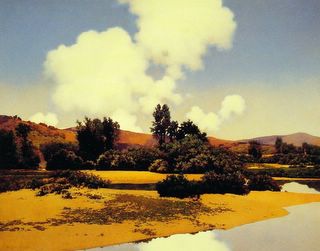
Maxfield Parrish: Little Sugar River at Noon Posted by Hello

Greg:

After a few days of sun, Seattle has returned to being the soggy hellhole more characteristic of its long–standing reputation. I have a "free" day today, stolen time as it were, and I would've liked to go for a bike ride, but it doesn't look like the weather is going to accommodate me. No amount of either shaking my fist or waving a chicken leg at the sky seems to have any effect. I've included Maxfield Parrish's Little Sugar River at Noon above so that I can have a reminder of what hot and dry looks like.

This whole day of nothing to do comes between the end of my job at the litigation support firm and the beginning of another writing contract with Smashing Ideas. I've worked for them before, once on a B–to–B sales manual for an interactive television product, and just last month again for a pitch that they were working on for a new kid's show for Nickelodeon's Nick Jr network. This time the client is America Online, and the job has to do with creating HTML emails. That's about all I know about it so far. I'll find out more tomorrow morning. I'm building up a pretty good client list this year, so my resume is getting to be more and more handsome as time goes on. It's nice to have nationally recognized names like Shockwave, AOL, and Nickelodeon on it. It makes me look like I know what the hell I'm doing.


Mmmmm. Slack. Posted by Hello


Teresa and I were talking about work ethic before she left this morning. I was explaining to her that making a living – meaning doing some sort of job for income in order to pay the bills – has always felt like punishment to me. I'm not saying that everyone loves to have a day job. I'm sure that nearly every wage slave in the US would rather being jet skiing or sitting at home watching Springer than working as a file clerk at an insurance company. On the other hand, the vast majority of wage slaves feel beholden to their jobs and the life that it provides, would fight to save them, and would be utterly lost if they got fired. Also, many people feel that there's honor in making a living, regardless of what you're doing. The point is bringing home the bacon. I believe that's what the Protestant work ethic is. I, on the other hand, have never developed that. I think it has to do with the fact that from the time I was fifteen on, my friends were working because the wanted to. I had to work or it seemed I would perish. My friends were using their incomes to buy cars and stereos. The only thing I could do with the income that I received from doing work that I hated was pay rent and buy groceries. I never got the chance to experience income as freedom. I'm not whining about it. I just think that it has been a detriment to my work ethic my entire life. I've never enjoyed the simple fact that I had an income. Maybe that's why my work ethic – when it comes to simply making a living – is terrible. However, my work ethic concerning my writing or school work is better than most.

I had a dream last week that Grampa Teachout was shouting at me, telling me that I was soft and lazy and didn't know the meaning of the word "work". I've felt very guilty recently about wanting to leave my litigation support job. The worst thing about it is that it is boring, which is a small complaint when you compare it to what a lot of people have to do to eat. I had it pretty good. On the other hand, I was racking up a whole lot of experience in a field I really never wanted to be in.

Maybe I am spoiled in more ways than one. Maybe the fact that I have a talent that garners me $75 an hour distorts my perceptions of honest work to the point that all I want is the easiest money that I can get with the least effort and turn up my nose at everything else. I don't know if there is a salient point that's going to emerge here. I just know that in general my relationship with money and income has been pretty screwed up my whole life, and I don't think it's just for the reasons that I always thought it was, like growing up in a low–income family. Dad has a really good work ethic and has never been on unemployment, so I know it's not because of his example. Maybe it's because I got into broadcasting too early and made way too much money by doing almost nothing, and that completely skewed my perception of what honest wages are.

I just downloaded a copy of Alan Watts Teaches Meditation from Audible.com. I've listened to it before, but this time around more if it seems to be "sticking" to my memory. What struck me most during my last listening was how he explained the world of symbols was not the real world. For example, reality is not what we say about it with word–symbols. He points to the fact that thoughts themselves are symbols, and if you're constantly thinking (like I am), you never get the opportunity to leave that construct of symbology and see the world as it truly is. I know that money is highly if not entirely symbolic. Its value is certainly only consentual. Money itself is practically virtual. I'm starting to feel that if I could just stop clinging to that symbol, I could get at what the real issue is behind my money "problems".

I'm off to the new downtown branch of the Seattle Public Library this morning. It just opened Monday, and it has been getting a lot of press. I was surprised to see it written up in the New Yorker. I guess its opening was the architectural event of the month. I'm not crazy about the design. To me it looks like Picasso's bird cage. Apparently it is designed in such a way that collections don't have to be broken up. What that means in terms of real, physical space I'll only understand when I see it. To me it only seems like a very large, very expensive, very pretentious bum–magnet. The old public library was mostly a gathering place for transients and was therefore redolent with an indelible eau de shite. I can't imagine that this new place is going to smell any different unless they have fruit–flavored urinal cake hanging on a rope from the end of every shelf.

I've probably prattled on enough. Thanks for listening and give my best to Marie.

18 May 2004

Cog Sci For The Masses!


Thos. Moran: A Scene On Tohickton Creek Posted by Hello

Greg:

Okay, I'm writing again. I've gone to Crane's (obviously) and picked up some more stationery. I've also bolstered my collection of artwork that I use to decorate my letters with a little Thomas Moran (above). Also, as you can see from the envelope, the US Postal Service has decided to issue a series of stamps that really has some artistic substance and looks like money – you know the way God intended, the way they used to make stamps back in the good old days when the adhesive on the back of them tasted like the horsehide it was made from. It's the most beautiful damn stamp I've ever seen, even if it is printed on Mylar. Too bad it's a memoriam to two crazy muffuckers who blazed a trail that was too soon followed by the founders of trailer parks. In this series, the US Postal Service has issued the panoramic stamp you see on the envelope, plus one portrait each of Lewis and Clark. Sacagawea got nothin'. They probably figured she already had a coin, and if they gave her more than that, they might appear apologetic.

It's only been a couple months since I was formally enrolled in a class and I can already feel my IQ taking a vertiginous drop. I feel like I need to get back to my math right away before I forget all of it. There's a precalculus for life sciences course that I'm looking at taking this summer. One of the people I tutor with has a degree in math from Dartmouth and she has agreed to tutor me if I need it. I have an awful lot of math to get out of the way (117, 122, 123 and then Calculus I and II), so it would probably be wise to get started on it as soon as possible.

I'm sure I lamented to you on the phone about the fact that all the really groovy schools are in the middle of bumfuck nowhere. Hampshire and Bennington are two that I'm really considering right now. The interdisciplinary approach that I'd like to take is Cognitive Science and Creative Writing. The reason for the combination of the two has a practical purpose in my mind. I believe that Cognitive Science is the fastest emerging science of all and will also have the greatest impact on the average person. It seems to me that the best way to get the most beneficial discoveries in the field into the hearts and minds of the population is to be able to write about them in the vernacular. The rubber has to hit the road in other words. What good are any of these discoveries if in the end they only make for interesting cocktail party conversation between a bunch of academic wanks? On the subject of creative writing, I just found out today that Mary Oliver was until recently a faculty member at Bennington. She's a poet that I mentioned in a previous letter. I included her picture. She kinda looked like Joe Namath in it. Remember? Anyway, I read her poetry handbook and it just stunned me. I also told you that Ed Hoagland teaches there. He is, in a word, the dope shit as well.

Christ, but it's late. Eight thirty already. I'm off to bed now, and I promise it won't be so long between letters.

Cheers, and give my best to Marie,

04 April 2004

One Word That Describes The Yoshida Brothers: Daaaaamn!


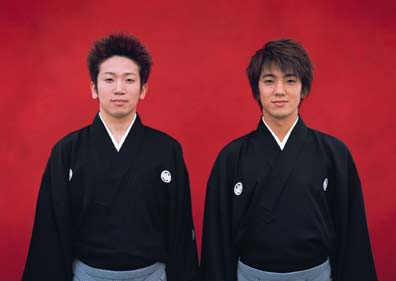
AssKick and OddJob: The Yoshida Brothers Posted by Hello

Greg:

Be forewarned. I'm about to rant about A&E's Breakfast with the Arts again.You know who rocks? No, you don't. The Yoshida Brothers rock. In fact, they rock so hard they should wear helmets. And you know what they play? No, you don't. They play the freakin' shamisen. Now when I think rock, I don't think 10th century Japanese instrument. Not often, anyway. But these guys wield the shamisen as though it was the Hammer of the Gods. The Three Strings of Doom. The Banzai Banjo. Say "herro" to superior rocking through ancient instruments, roundeye!

What's it like? Imagine if you will The Dixie Dregs' Steve Morse if he flat–picked a shamisen and was twins. Okay, that takes care of the speed aspect. Now imagine the thump–picking style of Les Claypool combined with guttural HOOO–uugghh jungle shouts on Kool and the Gang's Jungle Boogie. That rounds out the description a little better, but it's still not complete. Now picture AssKick, Yoshida Brother #1, [1] doing his tuning on the fly! He does not stop the rock to maintain his exquisite tone.

Now continue to dig: shamisen music usually sells about 5,000 CDs per year in Japan. That's the total of all shamisen artists combined. These cats have sold 300k. They're on fire for the Buddha.Needless to say, I applaud this sort of thing. Ironically, CBS Sunday Morning, which has been my substitute for church ever since I became a godless, heathen atheistic Buddhist, also ran a feature story on classical musicians. However, the classics they were talking about were mostly 18th and 19th century European guys, and the classical musicians they were talking about were the sort who dress like Cher and sell out the classics to an audience with clay palates by pissing in it with a so–called modern beat and look. I say give me Kiri Te Kanawa over The Opera Babes any day. She's Maori, she can sing her ass off so she doesn't need to show her navel, and she'll put your head on a pike if she has to. That's my kind of opera star.

Okay, I have to go make pancakes now. If you get the chance, go down to Borders or Barnes and Noble and give a free listen to the Yoshida Brothers. I believe that listening to them will not only rock both cheeks of your ass, it will reduce your karmic debt.

Cheers, and give my best to Marie.
[1] Not his real name. It's actually Ryoichiro, which I'm pretty sure means "Ass Kick" in Japanese anyway.

04 February 2004

TV Good. Bandura Bad!


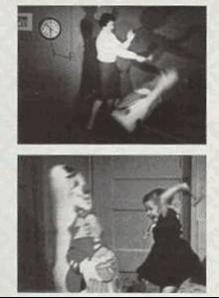
Bandura's studies showed that
if the kids didn't beat the clown,
it would eventually eat them.
 Posted by Hello

Dear Greg:

Sorry I haven't been sending as many letters as of late. I've been trying to finish my personal statement for Brown, which is about like writing a novel, and I've been reading Albert Bandura's Aggression: A Social Learning Analysis. It's 388 pages of way–the–hell–over–my–head. I got it from my professor, who I suspect was once a hardcore bruthah of the fist–in–the–air variety. He told me last week that he smoked a joint with Stokely Carmichael back in the early 70s. Or was it Huey Newton? One of those cats. Anyway, Bandura is the guy whose research was used to vilify television violence. To oversimplify social learning theory, the upshot is that people respond to environmental cues in order to model their behavior. We accept this as more–or–less common knowledge today[1], but in 1976, behaviorists had a dynastic stranglehold on psychology, and this was big news. It also made for great and alarming news bites: TV will make your kids violent. Of course, it's not nearly that simple, and in the end, the whole thing boils down to what the layman could infer from everyday observation. The more I study psychology, the more I adopt the viewpoint that we don't have the first goddamn idea how the human mind works, at least not through the use of psychological simile and metaphor. What's encouraging is that the whole of the science is insufficient to meet its aims, so it has morph and meld with the four other sciences of mind to become cognitive science if it's going to make any progress in explaining the human mind. And that is exactly what's happening. Some day far in the future, psychology will be to the science of thought what alchemy was to modern chemistry. You and I can meet up in 500 years to reëxamine how correct I was.

But before I take leave of Bandura and the 70s, lemme just say this. Yeah, kids watch TV and freak out. They watch Bruce Lee and start screaming and kick each other in the nuts and whatnot and freak their parents right the shit out. Some people would point to that and say "See? TV makes kids violent!" And if you're a complete idiot douchebag numbnuts lip–strumming yokel pinhead, you'll investigate the issue no further. You'll just stick a Kill Your TV sticker on your bumper, happy that you done went and eddicated yo'se'f. Now, for the rest of us who actually think about things, here's a little more information. Even Bandura's famous Bobo Doll experiment showed a massive rate of extinction for the violent behaviors that were emulated by the child subjects – from 88% to 40% in a matter of a few months.[2] If I were conditioning somebody to be violent, I'd want a hell of a lot smaller rate of extinction than that. My take? Kids (and everybody else) attempt to reach cognitive equilibrium with a new stimulus and subjectify new information by kinesthet–izing their experience. In other words, we often act out what we don't understand as one means of understanding it better. Conditioning someone to be aggressive takes a lot more than watching cartoons. Now all you freaked out parents sit down and shut the hell up.

Since I've been spending so much time with Mr. Bandura, it's what is foremost on my mind. There have been other events in my life of course, like the abject drudgery of my daily job. The best thing to happen recently is that I got accepted as an AmeriCorp volunteer tutor. I had my orientation[3] last night, and start tonight helping a high school student with his homework. It's a pretty cool program. They've built tutor centers, essential one–room schoolhouses, in various public housing projects. Kids from the building sign up for help with their homework. It's a hugely popular program with a long waiting list of kids trying to get in. I'm really happy to be a part of it. I've been trying to volunteer with various social service agencies, and this is the first one that I've had success with, believe it or not. The other ones didn't get back to me, or just couldn’t seem to get it together for one reason or another. I'm happy this one worked out, and we can all thank President Bill Clinton for creating AmeriCorps. It seems to be one of the most efficient social service agencies out there. This is going to give me some very vital teaching experience. Not that I don't have it already, but I'm much more used to lecturing whole roomfuls of people, rather than working one–on–one. That's a whole different art form. Did you know that in order to teach in a college or university, you don't have to take any education classes during your college years? It's a ridiculous tragedy. To teach in the public schools, elementary through high school, you have to be trained specifically in education. To teach at a college or university, you don't have to know anything about teaching at all. You just have to have good academic and research records. How freakin' stupid is that? I want to teach at a university, but more than that, I'd like to know how to actually teach when I get there.

I'm off to crawl back into my volume of Bandura. Give my best to Marie.

[1] Strange how we accept it as common knowledge only because it was simplified and vomited at us by the news media.
[2] Children emulated violent behavior toward a clown doll after they saw an adult doing it on a television monitor. That's the experiment in a nutshell.
[3] Does that mean I'm Oriental now?

28 January 2004

Eccentric :: Ezra Pound as
Delightfully Nutty :: Shithouse Rat


Ezra Pound: Pro-Fascist and a nutcase to boot Posted by Hello

Greg:

I've been thinking about this since last night and I have to get it on paper before it all runs away. I want to write something authentic – something that is faithful to my intention, reflexive of my true self. Moreover, I want to write something that speaks a pure truth whether it's about me or reflects me at all. That is my goal, my intention, in this life. Ezra Pound wrote in ideograms, or so I'm told. In other words, something like Words Written on Papyrus or whatever it was called was just that. The title was eponymous to the object, the object exactly what it was titled, the work in sum precisely filling the volume of the idea which is the vessel. No more, no less. A perfect representation, an exploration of Plato's forms, if you like.
[1]

I look back on what I've written in the past and it all seems so obsequious, so approval–seeking. It seems that I was writing as a form of showmanship. It meant that I wound up writing things that were very entertaining, but very low on content. There was no residual value to them other than the momentary amusement. My work looks like an endless string of "a–horse–walks–into–a–bar" jokes. To wit: pop songs. Not that there's anything wrong with jokes (or a really good pop song, like one written by John McCrea of Cake), but jokes like that have their place and I don't think it should be in literature. Even if you're going to write humor, I think it should be at least honest, in other words, not just going directly for the laugh at all costs. Humor is an adjunct to storytelling, but not the point of storytelling. So much of my writing has been a constant construction of façade, putting up a front so that I'd be liked, accepted. What crap. I should remember that even my writing isn't about me. As the novelist John Auster says, "you make a pact with yourself to tell the truth, and you'd rather cut off your right arm than break that promise". So hereafter, as much as I am able, I'll pursue my writing with the truth as I see it as my guiding principle.

Yeah, that's a grandiose aspiration, I know. But is there any other aspiration worth having? People say "don't get your hopes up". I'd rather the adage was "get your hopes up and leave them there". You should get your hopes up, get them up as high as possible, and not let anything bring them down. People do all sorts of hopeful and optimistic things every day, things they never give themselves credit for. Like get out of bed, for example. People who have no hope and no optimism stay in bed. Just ask Brian Wilson. What seems to me to be a fundamental error in our logic is that we do all these hopeful and optimistic things moment by moment – every second of our waking day is filled with some affirmation of the undammable persistence of life, each action we take propels us further ahead in the unspoken faith that something constructive will happen – yet we still agonize over how unfair, unjust and unfulfilling life is, and conclude that we live in a land of dread. I've done it myself, and it still confounds me. I came to conclusions about the whole of reality based on my skewed (viz. depressed) assumptions: I believe that my life sucks, therefore the whole of reality sucks. That's an error in inferential logic. I know, I've gone on a complete tangent, but as I said at the outset, this has been running around in my head since last night and I feel that I have to get it on paper to clarify it for myself and to confuse the hell out of you.

Which brings me to correspondence.
[2] It seems to me that letters are a form of literature that are completely authentic as a creative expression of personality. People who aren't trained writers, as well as those who don't refer to themselves as writers, write letters. So correspondence is a considerably more open province than, say, fiction or poetry. It is therefore also more honest.
Goddammit, now I've run out of time! I have school work that I promised myself I'd get done, note–reviewing and whatnot, and I have to do that now before I go to work. I'll probably wind up looking at this tomorrow and writing another version of it that's more easily understandable.

As I am loath to waste paper, I have cut–and–pasted a poem by Ezra Pound which I have chosen at random to fill out the remainder of this page. Okay, well, not entirely at random. I chose The River Merchant's Wife because it's based in Asian culture and it's, like, Lunar New Year right now and all. And I like it. It's just so goddamn sad.

Give my best to Marie,


The River-Merchant's Wife

While my hair was still cut straight across my forehead
I played about the front gate, pulling flowers.
You came by on bamboo stilts, playing horse,
You walked about my seat, playing with blue plums.
And we went on living in the village of Chokan:
Two small people, without dislike or suspicion.

At fourteen I married My Lord you.
I never laughed, being bashful.
Lowering my head, I looked at the wall.
Called to, a thousand times, I never looked back.

At fifteen I stopped scowling,
I desired my dust to be mingled with yours
Forever and forever and forever.
Why should I climb the look out?

At sixteen you departed,
You went into far Ku-to-yen, by the river of swirling eddies,
And you have been gone five months.
The monkeys make sorrowful noise overhead.

You dragged your feet when you went out.
By the gate now, the moss is grown, the different mosses,
Too deep to clear them away!
The leaves fall early this autumn, in wind.
The paired butterflies are already yellow with August
Over the grass in the West garden;
They hurt me. I grow older.
If you are coming down through the narrows of the river Kiang,
Please let me know beforehand,
And I will come out to meet you
As far as Cho-fu-Sa.
[1] Ezra Pound was a raving pro–Fascist who was, in the clinical term, about as crazy as a shithouse rat. It takes someone like that, I believe, to create such things as ideograms. Perhaps it's the literary equivalent to minimalist art.
[2] Oh, is that where we were going, Mr. Gunn? Coulda fooled me. I thought we were taking you to the Nuthatch.

08 December 2003

Sellouts, Cheaters, Embezzlers, And Other People I Admire


Maxfield Parrish: Sellout 

Dear Greg:

It dawned on me yesterday that the preservation of written correspondence has another vital aspect: the preservation of our true history. I started thinking about this while I was watching the extra features on "The Gangs of New York" DVD. The dramaturges and historians who contributed to the script were telling how they put together the history of the Five Points area, an area that was a virulent slum back in the 1860's.

The squalor of the Five Points area is mentioned in the writings of Dickens and Whitman, but other than that, there were no truly reliable sources. Newspapers of the day were wholly based on sensationalism and hearsay. Imagine if you will all the New York City newspapers being earlier incarnations of supermarket tabloids that we have today – yes, even the old tombstone, The New York Times. Sources weren't cited, stories were fictionalized either in whole or in part, photography wasn't prevalent so there was no sort of verifiable picture evidence, etc. Now bear in mind the fact that much of our history to this point is gleaned from popular newspapers of the day (or their equivalent) if there is no other source available. If it were not for archeological evidence and personal correspondence, we would have no accurate history of the Five Points area, or of life in the Roman Legions, for that matter.
[1]

So to flog my point even further, our situation today is that most of our personal correspondence exists as tiny magnetic impulses in some netherworld. All it takes is one good electromagnetic pulse and our voice–on–paper, the self–history of the common man from 1992 forward is erased. So that means that the only thing, or rather the only people who are writing our history right now are the same douchebags who write USA Today. Granted, modern journalism is a damn sight more reliable than the journalism of the Five Points era, but in my opinion, it is wildly inaccurate in giving a portrayal of the mind or language of the common man of today. I think that newspapers and magazines are more a reflection of what the average person will buy, and not what the average person actually thinks, or which events are of most importance or urgency to the world as a whole.

I'm not one of those people who wholeheartedly agrees with Noam Chomsky, either. From having worked in the news media, I know that news services tend to put the most emphasis on what they think will sell, as I mentioned above. Chomsky comes up just short of saying that there's a well–oiled conspiracy that turns the cogs of popular opinion. To wit, the New York Times' coverage of the situations in Cambodia and East Timor after the Vietnam War. Chomsky would like us to believe that the NYT was implicit in helping to direct attention away from the situation in East Timor because the United States was embarrassingly instrumental in supplying arms to a government that was practicing genocide. My view is that the NYT probably never made the connection between East Timor and our arms sales. Let me put it this way: the American public had been hearing about Southeast Asia and our involvement there for years. We had seen maps of the area behind Cronkite's head every night for a decade. We had 58,000 of our citizens die there. Now would you think it was easier for the NYT to sell papers to the average news consumer with headlines about Cambodia or East Timor? In fact, do you think that the average person, nay, even a person who was fairly well–informed could find East Timor on a map? The New York Times isn't stupid. They know their audience and they're in the business of making money, not of being some sort of Guardian and Disseminator of capital–The capital–Truth. But by the same token, it is the front page of the New York Times that informs the writing of our history. It will also wind up being the only perspective on our history if we don't leave some sort of verifiable artifact of our real history, and the only way we can do that as far as I can see is to preserve the art of personal correspondence.

Which brings me to the illustration that I put at the head of this letter. If it weren't for the intercommunications of the common man, I believe we would have lost the art of Maxfield Parrish. Parrish not only revolutionized painting technique, he expanded our color palette as well (Parrish Blue). Parrish was reviled by the press and hated by fellow artists. He was viewed as a sell–out and a cheater (for using photography in his work). He was also arguably the first truly commercial artist, which could be viewed either positively or negatively I suppose. If it were not for the spread of his popularity by word of mouth (read: personal correspondence), Parrish would not have reached the size of audience that he eventually did. By 1912, 25% of the houses in America had a Parrish print hanging in them. If it were left up to the papers and the art critics, Parrish would have been forgotten by history, or remembered as just another commercial artist hawking Jell–O.

A somewhat related tack: I'm beginning to realize that the general conception of historically famous persons, especially those in the arts and sciences, is misinformed. I think I told you in a previous letter about Jean Piaget, who is known as a child psychologist famous for the theory of the Stages of Development, which is widely accepted in psychological practices today. The fact of the matter is that Piaget was never a child psychologist at all, he was a biologist. Moreover, he was engaged in what sounds like some of the wildest science I've ever heard of: the search for morality in the fabric of the living cell. The Stages of Development stuff was just a by–product. But I've rarely found him introduced in any text that I've read as anything other than a child psychologist. If the truth be told, child psychology didn't exist as a science during the earliest part of Piaget's work, so I don't see how it's possible that he was a child psychologist. But that's just a temporal issue, perhaps. What I'm really getting at here is that those who write our history tend to classify things in a way that they believe will most easily digested or understood, not with an eye to what will be the most truthful.


O. Henry: Embezzler


Here's another example. Bill Porter was a recalcitrant bank teller of the same era of American history as M. Parrish. His greatest achievement during his early adulthood was embezzling $15,000 from his place of work, a feat which earned him 5 years of hard time in an Ohio prison. The boredom of prison life led him to try his hand at writing to pass the time. As legend has it, he began writing short stories and passing them along as correspondence through his local ward guard, Orrin Henry
[2]. By the time he was released from prison, William Sidney Porter had become O. Henry, and by the time of his death was arguably the world's most famous writer of short fiction, and a primary architect of the short story form as we know it today.

I submit Porter's story as an example of a contribution to history that was made possible only by correspondence. Perhaps if it were the fact that Porter wasn't in prison and was actually trying to make it as a short–story writer, nothing would have happened. Perhaps there was a certain drive or urgency underlying his stories because they were his communication with the outside world. It is perhaps this subtext of ardent honesty, the need to be understood, that same sort of energy that drives all correspondence – perhaps that is the occluded spark that makes Porter's work what it is. Anyone can write ironically if they're trained well enough. So why is it that we use the phrase "O. Henry ending" as a universally understood term for a particularly exquisite type of denouement?

And of course all of this brings the discussion around to me, which in my neurotic inverted–prickly–pear world is what it's really all about. I find as I get older that my neuroses take on a more solid form (something like bas relief, actually). I see this as a positive thing, because they're easier to pin down, describe, and even criticize. I often see in my mind's eye one of my many cerebral homunculi guiding a pack of art students through a forest of Corinthian columns, the capitals of which are decorated with bas relief of each of my neuroses. The homunculus stops and directs the attention of the class to each carving with a slender olive shoot. They crane their necks and scribble notes as the homunculus lectures in condescending tones on the ridiculousness of the cognitive distortions inherent in creating such artwork, but also points out that the whole of this phalanx of columns also bears up the whole weight of the granite roof above them, and if the gross integrity of the structure were to be compromised by removing one of the capitals, they would all be squashed flatter than Nebraska. Salient point: they are not without function. The class nods slowly as a dawn of realization breaks over them. Then they move along.

I have no gauge of my daily progress toward any particular goal. The only thing I see is the interior surface of the feed bag in front of me, and the only thing I feel is the alternately mounting and cresting anxiety that it will become empty, and there will be no one around to refill it, nor will I be able to refill it myself. The feed bag is an allegory for any one of a dozen things: my future, my studies, my paycheck, my talent. It is a truly miserable mental life, but on the other hand, it is a mental life distended to such Chekhovian proportions as to seem hilariously ridiculous even to me.

So I look at guys like Piaget, Porter and Parrish and I find that what they became in history had almost nothing to do with where they were going in their lifetime. I feel a compunction to do something not just good, but great. I feel that I must, that it's expected of me, and if I don’t, my life would have been nothing more than one long parasuicide. Since I have no idea how to accomplish that, in the meantime I'm hand–wringingly disconsolate to some degree or other every day, wishing that something or someone would come along and decide for me how that was going to happen. Inasmuch as I can observe this behavior and understand it as ludicrous and hyperbolically neurotic, I'm okay with that. So I guess if anyone were interested, I could some day be eulogized very simply: "He was completely miserable every day of his life, but he was very happy about it."

Cheers, and give my best to Marie,


[1] A trove of correspondence between Roman soldiers and their friends and family back home has been uncovered in Northern England near Hadrian's wall. They were mostly asking the folks at home to send them money, sweets and underwear. And they bitched about not receiving enough mail.

[2] For accuracy's sake, please understand that this is only one explanation of Porter's pen name.